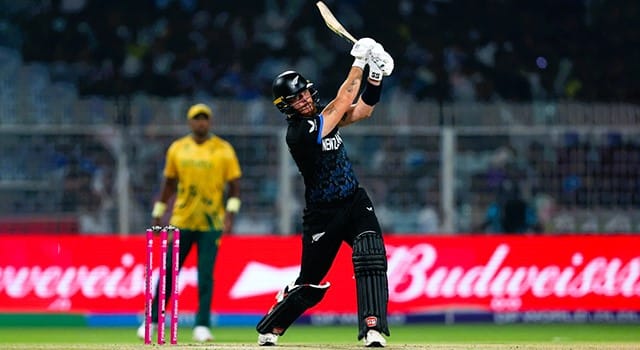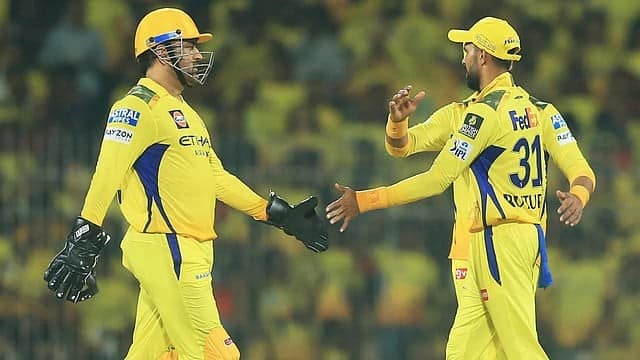
Pakistan has not yet officially stated any reason for boycotting the match against India in the T20 World Cup. However, this decision will affect not only these two countries but also world cricket. Bangladesh will not remain untouched by this impact either.

When asked about Pakistan’s decision, no BCB director wanted to speak on record. However, everyone is concerned about the possible financial loss following Pakistan’s decision since the BCB’s main source of income is the ICC’s revenue share.

The cricketing rivalry between India and Pakistan has somewhat decreased. In the most recent Asia Cup, Pakistan faced India three times and lost all matches. But beyond match results or rivalry, this fixture carries a much larger significance.

In its reaction after the Pakistani government announced the decision the night before yesterday, the ICC said that Pakistan’s refusal to play the match would impact the entire global cricket “ecosystem.” The biggest impact would be financial. BCB officials also share the same concern. A top BCB director, speaking anonymously said, “If the India-Pakistan match does not happen, the entire cricket world will face financial losses. Even our revenue share will decrease. We never wanted such losses.” He also mentioned the reason behind Pakistan’s strict decision, saying, “Pakistan wanted to send a strong message to Indian cricket. They wanted to challenge India’s dominance. From that perspective, it might be justified.”

Political hostility with India is one of the main reasons behind Pakistan’s decision not to play the match. PCB chairman Mohsin Naqvi has consistently opposed changing Bangladesh’s venue request and organizing the World Cup without them. He also spoke in favor of Bangladesh during ICC meetings. Therefore, many people are viewing Pakistan’s decision as support for Bangladesh. From that angle, it is also being seen as a strong message to India. A BCB director said, “Since the ICC ignored our concerns and excluded us without properly listening, a response was necessary. Pakistan’s decision not to play against India is a very significant development.”

However, the same official later expressed disappointment. The BCB is already facing financial loss because Bangladesh will not participate in this T20 World Cup. Domestic cricket is also no longer generating sufficient revenue. The money received from sponsorships and broadcasting rights is not enough to cover the country’s cricket expenses throughout the year.

A BCB director associated with the events related to Bangladesh’s absence from the World Cup said yesterday, “This will impact the ICC’s main financial pool. We are all stakeholders in that. For example, countries like Kenya or Uganda may be satisfied with one or two hundred thousand dollars. But with our infrastructure, how will we survive if ICC funding decreases?”

Beyond the financial impact, Bangladesh’s cricket diplomacy hostility with India, similar to India and Pakistan, is now becoming evident. The BCB believes this could negatively affect future tour schedules, including the Asia Cup.

However, despite everything, they remain hopeful that the crisis will be resolved soon. One board director concluded by saying, “The door for discussions can open at any time let’s see what happens.”

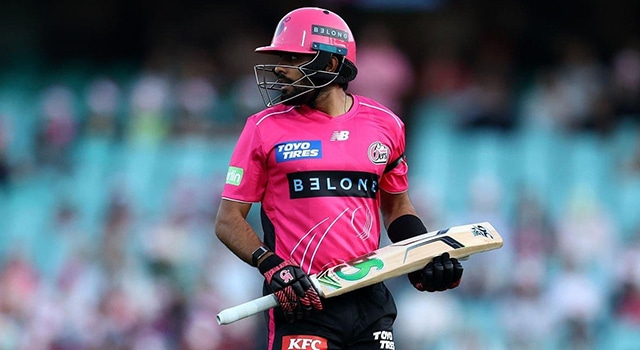
Because of his slow batting and inability to hit boundaries, Steven Smith refused Babar’s call for a single. For that reason, Babar vented his frustration while leaving the field. While playing in the Big Bash, Babar Azam was severely humiliated, though financially he benefited a great deal. Based on the money he earned per run, he could buy one iPhone 17 Pro Max for every two runs he scored, according to market prices in Pakistan. That is certainly not a bad return.

Babar Azam went to play in the Australian Big Bash for the first time and was signed in the Platinum category. His salary was 420,000 Australian dollars. At present, the exchange rate of the Australian dollar in Pakistan is 190 rupees per dollar. Accordingly, his earnings in Pakistani rupees amount to nearly 80 million.

Babar Azam failed to do justice to such a huge amount of money. Throughout the entire tournament, he scored only 202 runs. That means he earned roughly three and a half lakh rupees per run. Even then, it is fair to question how useful those runs were for the team. He played 11 matches for the Sydney Sixers.

In those 11 matches, Babar batted at a strike rate of just 103. Such slow batting can be described as a very poor performance by any standard. Across those 11 matches, he hit a total of 22 boundaries—only three sixes, with the remaining 19 being fours.

Because of his slow batting and inability to hit boundaries, Steven Smith refused his call for a single. That is why Babar expressed his anger while walking off the field. Has it ever occurred to Babar that he should also be angry with himself for his performance?

In the upcoming season of the IPL, Mustafizur Rahman will play for the Kolkata Knight Riders as the only Bangladeshi cricketer in the tournament. Bought for ₹9.2 crore, Mustafizur’s inclusion has sparked threats from religious leaders in Ujjain, Madhya Pradesh, who have warned of vandalism at the ground if he is fielded.

They claim this stance is due to recent violence against Hindus in Bangladesh. Calls to boycott the Kolkata team have also been made on social media.

Mahabir Nath, the chief priest of the Rinmukteshwar Mahadev Temple in Ujjain, said, “If a Bangladeshi player is brought onto the field, Kolkata will face serious trouble. Ascetic warriors will not allow the match to take place and will enter the ground to carry out vandalism.”

Meanwhile, uncertainty remains over the duration of Mustafizur’s participation in the IPL. BCB President Aminul Islam Bulbul stated that the Cricket Operations Department will decide based on the needs of Bangladesh’s international series.

BCB Cricket Operations Committee Chairman Nazmul Abedin Fahim said that since Bangladesh has a limited-overs series against New Zealand in April, Mustafizur will be able to join the IPL only after completing that series.

A rare embarrassing record for Australia at home in the Ashes: all out for 152 runs. In the first innings of the Melbourne Test, Australia was bowled out in just 45.2 overs. In the history of Ashes series at home, Australia has been dismissed in so few overs only twice—both times in Melbourne: once in 1902 and again in 2010.

Led by Steve Smith, Australia managed to score just 152 runs in the first innings. While the total isn’t very high, England’s batsmen still face a challenging test on the grass-covered pitch at the MCG against Australia’s bowlers.

The main architect of Australia’s batting collapse was England pacer Josh Tong. He took five crucial wickets for just 45 runs. His victims included Jack Weatherald, Marnus Labuschagne, Steve Smith, Michael Neser, and Scott Boland.

Tong’s dominance, especially over Steve Smith, was remarkable. Bowling against Smith in five innings so far, this English pacer has managed to dismiss him every single time.

For England, the Ashes has become a fight for survival, while Australia is chasing history. England are already trailing 3–0 in the Ashes series, and in such a situation the Boxing Day Test at Melbourne feels like the team is waiting for a “Christmas miracle.” On the other hand, a confident Australia, having sealed the series in Adelaide, now has only one objective — to send England home completely empty-handed.

Controversy surrounding the Noosa trip, allegations of excessive alcohol consumption, and the release of a video involving Ben Duckett have combined to create serious discomfort in the England camp. However, captain Ben Stokes has spoken emotionally, saying he will stand by his players. Although the Ashes may already be out of reach, Stokes said he wants to return from the tour with some positives.

Judging by performance, England showed some signs of a fightback in the latter stages of the Adelaide Test. Even so, Stokes admitted that the current Australian side is “very strong.” While Pat Cummins’ team has already retained the Ashes, their target is a 5–0 whitewash and valuable points in the World Test Championship.

However, major changes are also coming in the Australian camp. To avoid the risk of a back injury, Cummins will not play the remainder of the series. Nathan Lyon is also ruled out due to injury. Without opting for spinner Todd Murphy, the hosts are set to field a pace-heavy attack for the second time. After four long years, Jhye Richardson is in the race for a Test comeback. Taking advantage of Steven Smith’s illness, Usman Khawaja returns to the side and will bat at number five, while Alex Carey, in excellent rhythm behind the stumps, will bat at number six.

The biggest change in the England lineup is the omission of Ollie Pope. Jacob Bethell returns at number three in his place. Jofra Archer has been ruled out of the entire tour due to injury, bringing Gus Atkinson back into the pace attack. Despite the controversy, the team management has kept faith in Ben Duckett.

Probable XIs

Australia: Jake Weatherald, Travis Head, Marnus Labuschagne, Steven Smith (captain), Usman Khawaja, Alex Carey (wicketkeeper), Cameron Green, Michael Neser, Mitchell Starc, Brendan Doggett/Jhye Richardson, Scott Boland.

England: Zak Crawley, Ben Duckett, Jacob Bethell, Joe Root, Harry Brook, Ben Stokes (captain), Jamie Smith (wicketkeeper), Will Jacks, Gus Atkinson, Brydon Carse, Josh Tongue.

Pitch and Conditions

MCG curator Matt Page has said efforts have been made to prepare a wicket that offers something for both batters and bowlers. There will be around 10 mm of grass, which could assist the pacers early on. The weather on Boxing Day is expected to be relatively cool, with temperatures later rising to around 30°C. There is also a slight chance of rain on the first and last days.

All in all, it is a do-or-die battle for England on one side, and a chance for Australia to make history on the other. The Boxing Day Test in Melbourne promises to be the most dramatic chapter of the series.

Shakib Al Hasan has joined the elite group of players with the most Player of the Match awards in T20 cricket. He once again showed his familiar all-round brilliance in the ILT20, delivering a standout performance for MI Emirates against the Desert Vipers at the Dubai International Cricket Stadium on Sunday.

With the ball, Shakib was highly effective, conceding just 14 runs in his four overs while picking up two crucial wickets. He also contributed with the bat when the team needed him most, scoring an unbeaten 17 off 25 balls with a calm and responsible approach at the end of the innings. His all-round effort earned him the Player of the Match award.

Batting first, the Desert Vipers managed 124 runs for the loss of seven wickets in their allotted 20 overs. Chasing a relatively modest target, MI Emirates secured victory with six wickets down and 15 balls to spare.

In terms of Player of the Match awards in T20 cricket, Shakib Al Hasan has now earned a place among the format’s all-time greats. Having played 465 T20 matches so far, he has won the award 45 times, placing him joint third on the list of players with the most Player of the Match honors in T20s.

He shares this position with Afghanistan’s Rashid Khan and England’s Alex Hales. Rashid has achieved the milestone in 504 matches, while Hales reached the same number after playing 524 games.

Just ahead of Shakib on the list are two power-hitting all-rounders, Glenn Maxwell and Kieron Pollard, who are jointly second with 48 Player of the Match awards each. The record for the most Player of the Match awards in T20 cricket is held outright by West Indies legend Chris Gayle, who won the honor 60 times during his career.