Chennai’s Chepauk Stadium is synonymous with a magical sea of yellow. But in the last two seasons, that sea seemed to have no tide; Mahendra Singh Dhoni’s yellow ship stalled before reaching the harbor of the playoffs. As we stand on the threshold of IPL 2026, the question arises: can Chennai Super Kings reclaim their long-standing ‘invincible’ tag?

This time, CSK faces a crucial evening. On one hand, the departure of a giant like Ravindra Jadeja has left a massive void, while on the other, the world-class star Sanju Samson stands alongside the calm leadership of Ruturaj Gaikwad. The captain, Ruturaj, has returned to his familiar rhythm after recovering from last season’s injury. And even at 44, MS Dhoni remains an eternal lighthouse, whose presence instills confidence of victory in the dressing room.

Chennai has always been like a team playing slow, methodical chess moves. But the 2026 context is different. In the era of modern T20 revolutions, Chepauk’s pitch is no longer as slow as it used to be. As a result, Stephen Fleming’s strategy has undergone a radical change. Instead of traditional defensive play, the team now aims for aggressive batting right from the start. After the opening pair of Sanju Samson and Ayush Matre, Gaikwad at three will complete the trinity that will haunt opponents. Alongside them are ‘Baby AB’ De Villiers and India’s hard-hitter Shivam Dube.

In pace bowling, CSK is banking on the international experience of Matt Henry and Nathan Ellis. Henry’s swing with the new ball and Ellis’ variations in the death overs will be Chennai’s trump cards. In the spin department, Afghan ace Naveen Ahmad is supported by young guns like Kartik Sharma and Prashant Veer, on whom the franchise has invested freely.

Overall, batting has now become Chennai’s strength, particularly their massive batting depth. From the openers to the number eight, the presence of recognized batters gives the team the license to play fearless cricket. On the other hand, the inexperienced bowling lineup is a cause for concern. Occasional lapses by Khalil Ahmed or lack of alternatives in the death overs could trouble CSK.

In short, the past glory and the lure of the future combine to shape Chennai Super Kings in 2026. Will the mix of experience and youthful exuberance color the IPL trophy yellow once again? The cricketing world awaits the answer.
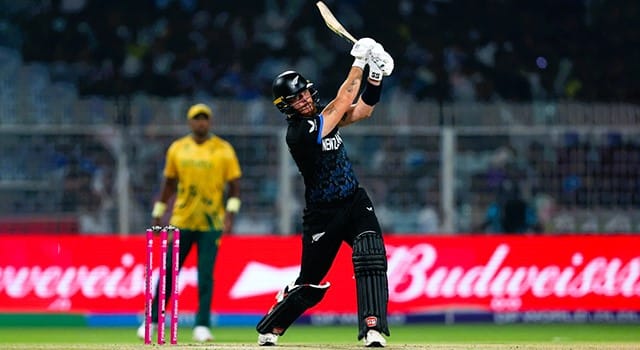

When the team needed just 17 more runs to win, Allen still required 20 runs to reach his hundred. But once Finn Allen began to charge, the result of the match was almost certain—New Zealand still had nine wickets in hand. So Allen pushed forward for his century. With just four quick boundaries, he reached the remarkable milestone of a hundred.

It was an incredible and breathtaking run chase by Finn Allen. Alongside the team’s chase, he was also chasing his personal milestone. New Zealand had never defeated South Africa in the T20 World Cup before. Allen made a fearless effort to end that painful record. He succeeded brilliantly, smashing a magnificent century.

Earlier, New Zealand’s bowlers had put South Africa under immense pressure. The Proteas were almost out of the match after losing five wickets for just 77 runs. However, Marco Jansen kept South Africa fighting with an aggressive batting display. Perhaps Allen did not appreciate that resistance, because he soon unleashed an onslaught.

Partnering with Tim Seifert, Allen began building South Africa’s downfall. At one stage, Allen had fewer runs than Seifert, but he eventually registered the joint-fastest half-century of this World Cup. Allen reached 50 runs in just 19 balls, and from there he accelerated toward his personal century.

Even though the team’s victory was almost guaranteed, Allen never slowed his attacking pace. In the next 14 balls, he reached the magical three-figure mark while matching the runs required for the team’s win. Thanks to his blistering innings at a strike rate above 300, New Zealand secured a dominant victory.

And Allen created a new record. In a T20 clash between two Test-playing nations, Finn Allen smashed a century in just 33 balls—the fastest ever. The previous record belonged to David Miller, who scored a 35-ball century against Bangladesh in 2017.

Pakistan has not yet officially stated any reason for boycotting the match against India in the T20 World Cup. However, this decision will affect not only these two countries but also world cricket. Bangladesh will not remain untouched by this impact either.

When asked about Pakistan’s decision, no BCB director wanted to speak on record. However, everyone is concerned about the possible financial loss following Pakistan’s decision since the BCB’s main source of income is the ICC’s revenue share.

The cricketing rivalry between India and Pakistan has somewhat decreased. In the most recent Asia Cup, Pakistan faced India three times and lost all matches. But beyond match results or rivalry, this fixture carries a much larger significance.

In its reaction after the Pakistani government announced the decision the night before yesterday, the ICC said that Pakistan’s refusal to play the match would impact the entire global cricket “ecosystem.” The biggest impact would be financial. BCB officials also share the same concern. A top BCB director, speaking anonymously said, “If the India-Pakistan match does not happen, the entire cricket world will face financial losses. Even our revenue share will decrease. We never wanted such losses.” He also mentioned the reason behind Pakistan’s strict decision, saying, “Pakistan wanted to send a strong message to Indian cricket. They wanted to challenge India’s dominance. From that perspective, it might be justified.”

Political hostility with India is one of the main reasons behind Pakistan’s decision not to play the match. PCB chairman Mohsin Naqvi has consistently opposed changing Bangladesh’s venue request and organizing the World Cup without them. He also spoke in favor of Bangladesh during ICC meetings. Therefore, many people are viewing Pakistan’s decision as support for Bangladesh. From that angle, it is also being seen as a strong message to India. A BCB director said, “Since the ICC ignored our concerns and excluded us without properly listening, a response was necessary. Pakistan’s decision not to play against India is a very significant development.”

However, the same official later expressed disappointment. The BCB is already facing financial loss because Bangladesh will not participate in this T20 World Cup. Domestic cricket is also no longer generating sufficient revenue. The money received from sponsorships and broadcasting rights is not enough to cover the country’s cricket expenses throughout the year.

A BCB director associated with the events related to Bangladesh’s absence from the World Cup said yesterday, “This will impact the ICC’s main financial pool. We are all stakeholders in that. For example, countries like Kenya or Uganda may be satisfied with one or two hundred thousand dollars. But with our infrastructure, how will we survive if ICC funding decreases?”

Beyond the financial impact, Bangladesh’s cricket diplomacy hostility with India, similar to India and Pakistan, is now becoming evident. The BCB believes this could negatively affect future tour schedules, including the Asia Cup.

However, despite everything, they remain hopeful that the crisis will be resolved soon. One board director concluded by saying, “The door for discussions can open at any time let’s see what happens.”

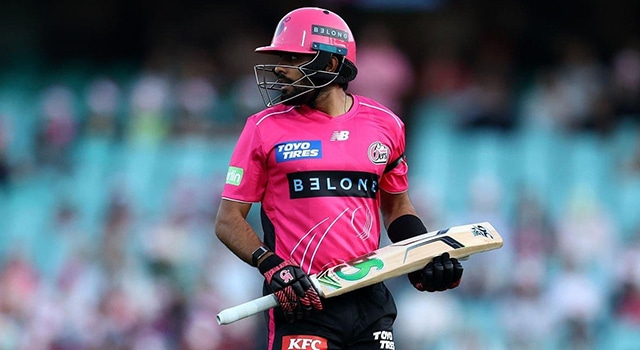
Because of his slow batting and inability to hit boundaries, Steven Smith refused Babar’s call for a single. For that reason, Babar vented his frustration while leaving the field. While playing in the Big Bash, Babar Azam was severely humiliated, though financially he benefited a great deal. Based on the money he earned per run, he could buy one iPhone 17 Pro Max for every two runs he scored, according to market prices in Pakistan. That is certainly not a bad return.

Babar Azam went to play in the Australian Big Bash for the first time and was signed in the Platinum category. His salary was 420,000 Australian dollars. At present, the exchange rate of the Australian dollar in Pakistan is 190 rupees per dollar. Accordingly, his earnings in Pakistani rupees amount to nearly 80 million.

Babar Azam failed to do justice to such a huge amount of money. Throughout the entire tournament, he scored only 202 runs. That means he earned roughly three and a half lakh rupees per run. Even then, it is fair to question how useful those runs were for the team. He played 11 matches for the Sydney Sixers.

In those 11 matches, Babar batted at a strike rate of just 103. Such slow batting can be described as a very poor performance by any standard. Across those 11 matches, he hit a total of 22 boundaries—only three sixes, with the remaining 19 being fours.

Because of his slow batting and inability to hit boundaries, Steven Smith refused his call for a single. That is why Babar expressed his anger while walking off the field. Has it ever occurred to Babar that he should also be angry with himself for his performance?

In the upcoming season of the IPL, Mustafizur Rahman will play for the Kolkata Knight Riders as the only Bangladeshi cricketer in the tournament. Bought for ₹9.2 crore, Mustafizur’s inclusion has sparked threats from religious leaders in Ujjain, Madhya Pradesh, who have warned of vandalism at the ground if he is fielded.

They claim this stance is due to recent violence against Hindus in Bangladesh. Calls to boycott the Kolkata team have also been made on social media.

Mahabir Nath, the chief priest of the Rinmukteshwar Mahadev Temple in Ujjain, said, “If a Bangladeshi player is brought onto the field, Kolkata will face serious trouble. Ascetic warriors will not allow the match to take place and will enter the ground to carry out vandalism.”

Meanwhile, uncertainty remains over the duration of Mustafizur’s participation in the IPL. BCB President Aminul Islam Bulbul stated that the Cricket Operations Department will decide based on the needs of Bangladesh’s international series.

BCB Cricket Operations Committee Chairman Nazmul Abedin Fahim said that since Bangladesh has a limited-overs series against New Zealand in April, Mustafizur will be able to join the IPL only after completing that series.

A rare embarrassing record for Australia at home in the Ashes: all out for 152 runs. In the first innings of the Melbourne Test, Australia was bowled out in just 45.2 overs. In the history of Ashes series at home, Australia has been dismissed in so few overs only twice—both times in Melbourne: once in 1902 and again in 2010.

Led by Steve Smith, Australia managed to score just 152 runs in the first innings. While the total isn’t very high, England’s batsmen still face a challenging test on the grass-covered pitch at the MCG against Australia’s bowlers.

The main architect of Australia’s batting collapse was England pacer Josh Tong. He took five crucial wickets for just 45 runs. His victims included Jack Weatherald, Marnus Labuschagne, Steve Smith, Michael Neser, and Scott Boland.

Tong’s dominance, especially over Steve Smith, was remarkable. Bowling against Smith in five innings so far, this English pacer has managed to dismiss him every single time.